
Navy Victoria
Network
Proudly supported by the Melbourne Naval Committee
Commodore James Cairns MORROW, CBE DSO DSC MiD
Returning to Australia, Lieutenant Morrow served as navigator of HMAS Marguerite (1927-29) and as a watchkeeper in HMAS Australia (1929-31) before joining the staff of the Royal Australian Naval College (then at Flinders Naval Depot, Westernport, Victoria). From 1933 to 1935 he was attached to the Royal Navy. His marriage (probably on 13 April 1935) ended in divorce. He was promoted Lieutenant Commander in 1936, while Executive Officer of HMAS Vendetta. In April 1938 he took command of the destroyer, HMAS Voyager, which was deployed to the Mediterranean shortly after World War II began. On 14 October 1939 HMA ships Stuart (I), Vendetta (I) and Waterhen (I) departed Sydney for Singapore, proceeding via Darwin and Lombok Strait. The same day Vampire (I) and Voyager departed Fremantle to join company at Singapore. It was originally intended for the Flotilla to be based in Singapore, but en route it was decided that the ships would be of more use in the Mediterranean. The arrival of the Australian Destroyer Flotilla was met with derision in Germany, with Nazi propaganda minister Joseph Goebbels referring to Voyager and her sister ships as "Australia's Scrap Iron Flotilla", a moniker the ships quickly adopted.
On 13 June 1940 Voyager made contact with a
submarine while on patrol outside the port of Alexandria.
The destroyer responded with an attack and, with later
assistance by one of the other destroyers, sank the intruder, taking
the honour of being the first RAN vessel to sink a
submarine. Not satisfied with one, on the same night
Voyager detected another and expended her remaining
depth charges on the target and then assisted HMAS
Stuart in carrying out further attacks. Voyager
and the rest of the "Scrap Iron Flotilla" successfully attacked a
further three submarines at the end of June off Alexandria.
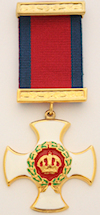
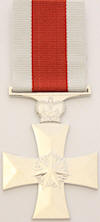
Morrow was awarded the Distinguished Service Order (DSO) for
... ... courageous enterprise and devotion to duty ... ... and on 30th June he was promoted to Commander. In July his ship screened the aircraft-carrier, HMS Eagle, in the battle of Calabria. Between December 1940 and April 1941 Voyager operated for extensive periods off the North African coast. Maintaining sea communications and bombarding shore positions, she supported the British and Australian drive westwards across Libya and covered the subsequent withdrawal to Tobruk. He was mentioned in dispatches for this work. During the evacuation of British Commonwealth forces from Greece in late April 1941, Voyager carried soldiers and nurses to safety. In the last three weeks of May she helped to reinforce Crete. Earlier that month she had made her first run as part of the 'Tobruk Ferry', a shuttle-service of destroyers which supplied the fortress from Egyptian ports. Resuming that role, Voyager transported troops, ammunition and stores until she sailed for Australia in July. Morrow left the ship in November and in March 1942 assumed command of the newly built destroyer, HMAS Arunta.
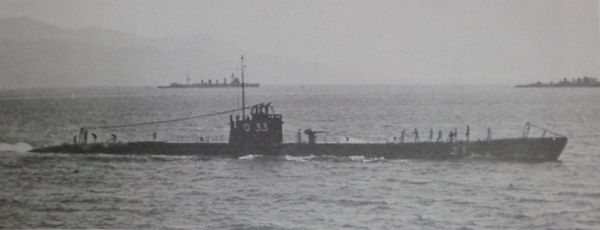
On 7 August in the Gulf of Papua; the Japanese submarine, RO-33, torpedoed a merchant ship, MV Mamutu, which was engaged in the evacuation of civilians ahead of advancing Japanese forces in New Guinea. Its crew then began machine-gunning the survivors — men, women and children.
On 29 August 1942, RO-33 torpedoed the Burns Philp ship Malaita as she left Port Moresby, New Guinea. Malaita was under escort by the Arunta, then while Malaita was towed back to Port Moresby, Arunta made an asdic contact on RO-33 and conducted a series of depth-charge attacks that sank the Japanese submarine 10 nautical miles southeast of Port Moresby with the loss of all hands. Morrow won the Distinguished Service Cross for ... ... the sinking of the submarine RO-33 ...
Morrow's outstanding record as a Captain of destroyers in wartime stemmed from his gifts as a seaman and leader. He was a 'superb shiphandler'. Friendly and convivial, he won the affection of his men as well as their respect. His piercing eyes and ringing voice complemented his strength of character. At St Mark's Anglican Church, Darling Point, Sydney, on 11 September 1946 he married 27-year-old Dulce McWhannell. As an acting and (from June 1947) substantive Captain, Morrow commanded HMAS Bataan in 1946-48. He served as Australian naval attaché, Washington (1948-51), Commanding Officer of HMAS Australia (1951-52) and Commodore Superintendent of Training at Flinders Naval Depot (1952-55). He was promoted Commodore, First Class, and was appointed Chief of Naval Personnel in January 1955. He had little aptitude or liking for staff duties. In the 1956 Queens Birthday Honours list he was appointed Commander of the Order of the British Empire (CBE) for ... ... long and distinguished service to the Royal Australian Navy.
On 8th January 1963, James 'Copper' Morrow died of cancer at his Vaucluse home and was cremated. He was survived by his wife Dulce and their two sons Jim and Simon. On 28 June 1996 Dulce Morrow was given the honour of launching HMAS Arunta II. Dulce passed away in 2020 - she was 101. _______________________________________________________________________________
Sources: Compiled by Laurie Pegler |
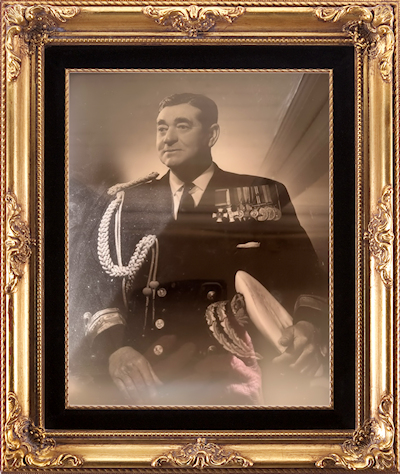 James
Cairns 'Copper' Morrow was born on 6 February 1905 at Brunswick,
Melbourne, son of Australian-born parents James Ernest
Morrow, implement-maker, and his wife Marion Agnes, née
Cairns. James Morrow was his grandfather. Young
James attended Melbourne Church of England Grammar School
and entered the Royal Australian Naval College,
Jervis Bay, Federal Capital Territory in 1919. He was
nicknamed 'Copper' because of the colour of his hair.
Chief cadet captain in 1921, he gained colours for cricket
and Rugby, and won the King's medal on graduating in 1922.
As a Midshipman (1923-25) and a Sub-Lieutenant (1925-28), he trained at sea and
completed courses in Britain.
James
Cairns 'Copper' Morrow was born on 6 February 1905 at Brunswick,
Melbourne, son of Australian-born parents James Ernest
Morrow, implement-maker, and his wife Marion Agnes, née
Cairns. James Morrow was his grandfather. Young
James attended Melbourne Church of England Grammar School
and entered the Royal Australian Naval College,
Jervis Bay, Federal Capital Territory in 1919. He was
nicknamed 'Copper' because of the colour of his hair.
Chief cadet captain in 1921, he gained colours for cricket
and Rugby, and won the King's medal on graduating in 1922.
As a Midshipman (1923-25) and a Sub-Lieutenant (1925-28), he trained at sea and
completed courses in Britain.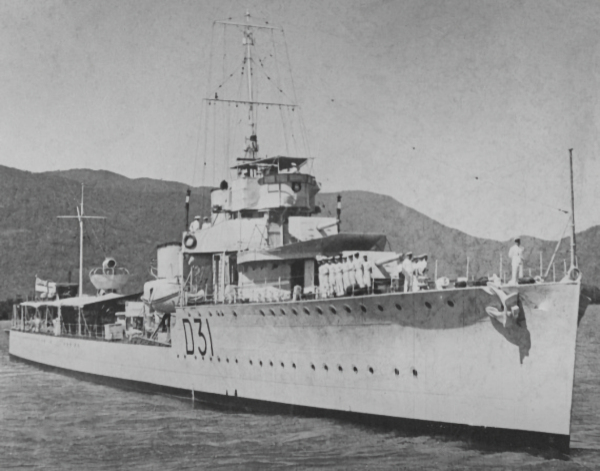
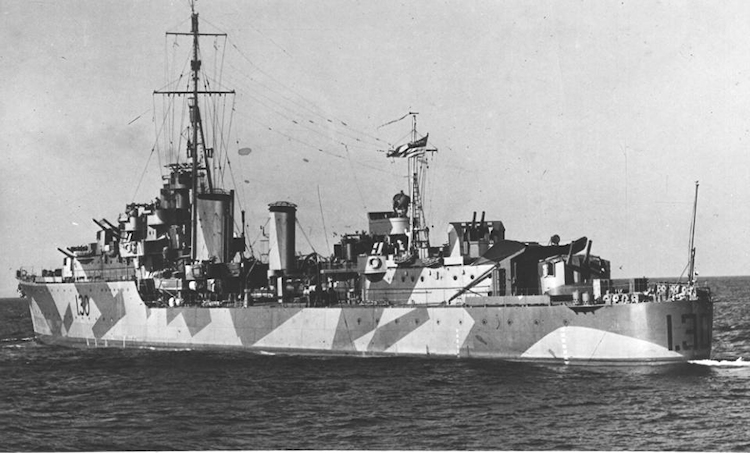
 Although employed primarily on convoy-protection work in
eastern Australian and Papuan waters, Arunta landed
the 2nd/12th Battalion on Goodenough Island in October 1942
and carried Lancer Force from Timor in January 1943.
Posted ashore in August, Morrow commanded escort forces in
Sydney and (from January 1944) at Milne Bay, Papua. He
joined the cruiser, HMAS Shropshire, as Executive
Officer in May 1945; she sailed to Tokyo Bay
Although employed primarily on convoy-protection work in
eastern Australian and Papuan waters, Arunta landed
the 2nd/12th Battalion on Goodenough Island in October 1942
and carried Lancer Force from Timor in January 1943.
Posted ashore in August, Morrow commanded escort forces in
Sydney and (from January 1944) at Milne Bay, Papua. He
joined the cruiser, HMAS Shropshire, as Executive
Officer in May 1945; she sailed to Tokyo Bay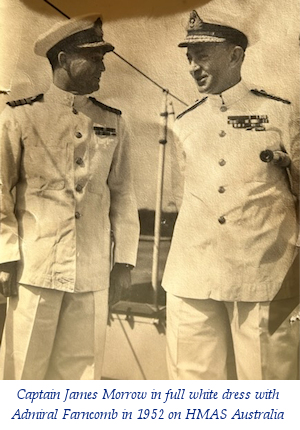 for the
Japanese surrender ceremony in September.
for the
Japanese surrender ceremony in September.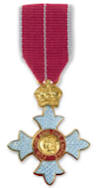 Following a posting (1956-59) as Naval Officer-in-Charge,
Western Australia, he retired from the Navy on 6 February
1960. He worked in 1960-61 as Chief Executive Officer,
Melbourne metropolitan area, for World Refugee Year, and
later held a post in Sydney with the Australian National
Travel Association. For recreation, he watched cricket
and football, and went to the races.
Following a posting (1956-59) as Naval Officer-in-Charge,
Western Australia, he retired from the Navy on 6 February
1960. He worked in 1960-61 as Chief Executive Officer,
Melbourne metropolitan area, for World Refugee Year, and
later held a post in Sydney with the Australian National
Travel Association. For recreation, he watched cricket
and football, and went to the races.