Navy Victoria
Network
Proudly supported by the Melbourne Naval Committee
Commander Rupert Basil Michel Long OBE
Sent to England in 1919 for further training, Long gained the maximum of five first-class certificates for his Lieutenant's courses. He joined HMS Ramillies and qualified as a torpedo specialist before returning to Australia in 1924. Following postings to HMA ships Platypus (1924-25) and Anzac (1925-26), he served in the Mediterranean and on the China Station in HMS Dauntless. On 29 October 1927 at St Clement's parish church, Oxford, England, he married Heather Mary Macrae (d.1935). Promoted Lieutenant Commander in January 1928, he was Squadron Torpedo Officer when the new Australia was commissioned three months later. In 1933 he passed the course at the Royal Naval Staff College, Greenwich. Next year Long took up duties as District Intelligence Officer and Staff Officer to the Captain Superintendent, Sydney. He improved and expanded the local intelligence organisation. In April 1936 he was posted to Navy Office, Melbourne, as assistant-Director of Naval Intelligence and Staff Torpedo Officer. Among his most important tasks was the strengthening of the coastwatcher network, especially in the islands north of Australia. Fleet Admiral William F. Halsey, United States Navy, was to credit the coastwatchers with saving Guadalcanal in 1942. At the Presbyterian Church, Lindfield, Sydney, on 19 August 1937, Long married a divorcee Frances Vera Cliff, daughter of Sir Walter Carpenter. Appointed Director of Naval Intelligence on 25 August 1939, Long was promoted Acting Commander on 6 April 1940. Influenced by his father to be proudly Australian, he recognised the necessity of working closely with allied intelligence agencies. He represented Britain's Military Intelligence 5 and MI6 in Australia, receiving the benefit of their worldwide connexions. The linchpin of Australian intelligence and security work, Long set up an espionage system in the Netherlands East Indies and South-West Pacific. In 1940 he advocated the formation of the Combined Operational Intelligence Centre, Melbourne, and in January 1941 became its first director, in addition to his role as D.N.I. He founded the Special Intelligence Bureau under Commander (Captain) T.E. Nave to help break Japanese consular and merchant-navy codes, and received 'Ultra' material (intercepted and decrypted enemy messages) from Britain. Long formed close contacts with cryptanalysts in Singapore, Batavia and Canada, and with the Far East Security Service. He played a role in the formation (March 1941) of the Commonwealth Security Service. In 1942 he persuaded General Sir Thomas Blamey to set up the Far Eastern Liaison Office for psychological warfare. General Douglas MacArthur accepted Long's proposal to establish the Allied Intelligence Bureau, which co-ordinated the activities of Coastwatchers and other intelligence and sabotage parties operating in Japanese-occupied territory. Long had attended a conference on cryptanalysis and espionage in Singapore in November 1941, and in September 1944 went to London for a Joint Intelligence Committee conference. In January-February 1945 he visited Washington, New York and Ottawa to discuss postwar security with the Federal Bureau of Investigation, British Security Co-ordination, the Royal Canadian Mounted Police and Canadian naval intelligence.
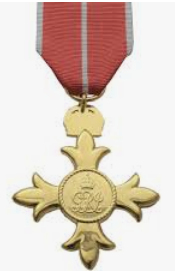
One of the significant Warld War II honours was his
appointment as an OBE.....
..... for his dedication as Director of Naval Intelligence throughout the war. He had commenced to build up the Navy's intelligence assets and capabilities before the war: his insistence on widening the scope of the Coast Watchers service into the islands to Australia's north and east was clearly an important factor in what was to follow. More than that, he created an organisation whose reach extended into almost every activity of the Allied forces, not only supporting the Allied cause with intelligence, but also ensuring that Navy Office was aware of what was happening within Allied staffs. The breadth and scope of his contacts were legendary. His biography by Barbara Winter was titled, The Intrigue Master, but this was only one part of his modus operandi, and his contributions to winning the war were most significant, and held in high regard by his Allied opposite numbers. Leaving the Navy in December 1945, Long embarked on a business career in Sydney, establishing engineering and precision-instruments firms, and dabbling in the mining of mineral sands. In 1949 he unsuccessfully sought Liberal Party pre-selection for the Federal seat of Mackellar. For a time he was connected with the Association, a secretive, anti-communist organization. A heavy smoker, he died of cancer on 8 January 1960 at his Manly home and was cremated. His wife and their son and daughter survived him. Colonel Allison W. Ind, a United States Army officer and author, described Long as 'a stocky man with a cupid's-bow mouth and a steel-trap mind'. Known as 'Cocky' or 'Von', he supported his men and their families, and won their devotion. Paul McGuire wrote that British Naval Intelligence Officers regarded Long as 'one of the ablest of them all'. Eric Feldt considered that, in a war in which it was often said that 'too little' was done 'too late', Long 'did enough and he did it in time'. _______________________________________________________________________________
Sources: Compiled by Laurie Pegler |
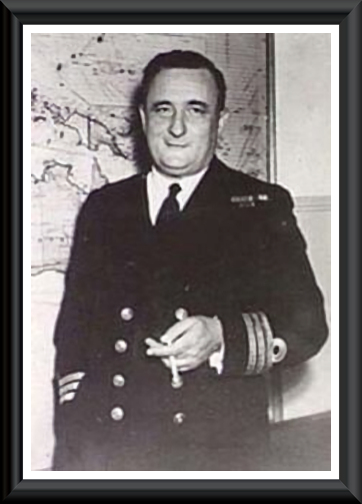 Rupert Basil Michel Long, naval officer and
businessman, was born in Melbourne on 19 September 1899, youngest of eight children of Victorian-born
parents Charles Richard Long, inspector of schools, and his
wife Louisa Catherine, née Michel. Educated at Princes Hill
State School, Rupert entered the Royal Australian Naval
College, Osborne House, Geelong, with the first intake of
cadets in 1913. He went to sea in HMAS Australia
(1917-18) as a Midshipman and in HMAS Huon (1918-19) as
a Sub-Lieutenant.
Rupert Basil Michel Long, naval officer and
businessman, was born in Melbourne on 19 September 1899, youngest of eight children of Victorian-born
parents Charles Richard Long, inspector of schools, and his
wife Louisa Catherine, née Michel. Educated at Princes Hill
State School, Rupert entered the Royal Australian Naval
College, Osborne House, Geelong, with the first intake of
cadets in 1913. He went to sea in HMAS Australia
(1917-18) as a Midshipman and in HMAS Huon (1918-19) as
a Sub-Lieutenant.