Vice Admiral
Sir Roy Russell DOWLING, KCVO, KBE, CB, DSO
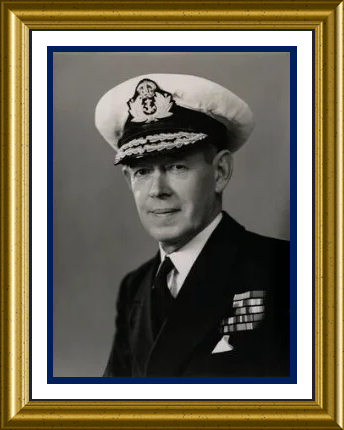 Sir
Roy Russell Dowling, was born on 28 May 1901 at Condong, on
the Tweed River, New South Wales. Sixth child of native-born parents Russell Dowling,
sugar-cane inspector, and his wife Lily Jane, née Ingram.
Sir J.S. Dowling was Roy's grandfather. In 1915 young Dowling
entered the Royal Australian Naval College, Jervis Bay,
Federal Capital Territory. Although his academic performance
was undistinguished, he was a natural sportsman; he was made
chief cadet captain and graduated as King's medallist in
1918. Sir
Roy Russell Dowling, was born on 28 May 1901 at Condong, on
the Tweed River, New South Wales. Sixth child of native-born parents Russell Dowling,
sugar-cane inspector, and his wife Lily Jane, née Ingram.
Sir J.S. Dowling was Roy's grandfather. In 1915 young Dowling
entered the Royal Australian Naval College, Jervis Bay,
Federal Capital Territory. Although his academic performance
was undistinguished, he was a natural sportsman; he was made
chief cadet captain and graduated as King's medallist in
1918.
Sent to Britain in 1919 for training with the Royal Navy(RN),
Midshipman Dowling was present at the scuttling of the
German High Seas Fleet on 21 June in Scapa Flow, Orkney
Islands. Next year he participated in operations in the
Bosporus and the Sea of Marmara against Turkish
nationalists. Having completed courses at Greenwich and
Portsmouth, he returned to Australia in 1922, joined the
cruiser, HMAS Adelaide, and was promoted Lieutenant in
March 1923. The ship accompanied the RN's Special Service
Squadron from Australia to England in 1924.
With a growing reputation as a competent young officer,
Dowling left Adelaide in October 1924 and completed the
specialist gunnery course at Portsmouth. He came home in
December 1926 and served in the destroyer depot ship,
Platypus, and the destroyer, Anzac, as flotilla gunnery
officer. In July 1928 he was posted to the gunnery school at
Flinders Naval Depot (HMAS Cerberus), Westernport,
Victoria, where he had a busy teaching schedule.
On 8 May
1930 in the chapel of Melbourne Church of England Grammar
School he married Jessie Spencer, younger daughter of G. E.
Blanch; they were to have five children, including two sets
of twins.
In December Lieutenant Commander Dowling embarked with his
wife for England. From May 1931 he was gunnery officer of
the light cruiser, Colombo, on the Mediterranean Station;
the vessel spent six months as flagship of the Third Cruiser
Squadron. Back home, in 1933-35 Dowling was squadron gunnery
officer in the cruiser, Canberra. Rear Admiral (Sir)
Wilbraham Ford considered him an 'officer of outstanding
ability'. On 10 July 1935 Dowling took charge of the gunnery
school, but his prospects were tempered by the continuing
effects of the Depression. Despite further good service and
more golden opinions from his seniors, he had to wait until
31 December 1936 for promotion to Commander.
Next month Dowling assumed command of the new sloop, Swan,
which performed squadron work and conducted independent
cruises. Baron (Earl) Gowrie and Lady Gowrie travelled with
him in 1937 during part of their tour of Papua and the
mandated Territory of New Guinea. Although Dowling probably
enjoyed his time in Swan, he had some difficult moments and
clashed on at least one occasion with Rear Admiral (Sir)
Richard Lane-Poole, the commander of the Australian
Squadron. Lane-Poole recommended that Dowling gain
experience as executive officer of a major vessel. By
October 1939 he was standing by the anti-aircraft cruiser,
Naiad, under construction in Britain.
Completed in mid-1940, Naiad served in the British Home
Fleet. A pressing need for anti-aircraft units in the
Mediterranean led to her transfer there in May 1941. During
operations off Crete that month, the cruiser was bombed and
badly damaged. Dowling played a leading part in work which
enabled her to reach harbour. Following five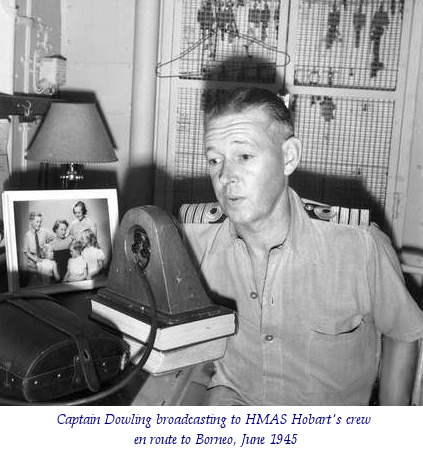 weeks of
repairs, Naiad escorted convoys to Malta and protected the
fleet from air attacks. In November she hoisted the flag of
Rear Admiral (Admiral of the Fleet Sir) Philip Vian and next
month took part in the first battle of Sirte in which
British cruisers and destroyers drove off a more powerful
Italian force. On 11 March 1942 Naiad was torpedoed by U-565
about 50 nautical miles (93 km) off the coast of Egypt. She
sank in little over twenty minutes with the loss of
eighty-two men. weeks of
repairs, Naiad escorted convoys to Malta and protected the
fleet from air attacks. In November she hoisted the flag of
Rear Admiral (Admiral of the Fleet Sir) Philip Vian and next
month took part in the first battle of Sirte in which
British cruisers and destroyers drove off a more powerful
Italian force. On 11 March 1942 Naiad was torpedoed by U-565
about 50 nautical miles (93 km) off the coast of Egypt. She
sank in little over twenty minutes with the loss of
eighty-two men.
A survivor of the sinking, in July 1942 Dowling became
director of plans at Navy Office, Melbourne. The RAN's
heavy losses continued until August and he was involved in
efforts to restore the service's strength. In September 1943
he was made acting (substantive June 1944) Captain and
Deputy Chief of Naval Staff. As such, he played a key role
in initial planning for the postwar navy: a carrier force
was envisaged as part of the measures to give the RAN
greater ability to operate independently in the Pacific and
Indian oceans.
In November 1944 Dowling took command of the cruiser,
Hobart, as she emerged from a prolonged refit.
Strikes and an erratic supply system hampered his efforts to
make the ship fully operational, but he eventually ensured
that she acquitted herself well in action. Next year
Hobart supported the invasions of Cebu Island,
Philippines (March), Tarakan Island, Borneo (April-May),
Wewak, New Guinea (May), and Brunei (June) and Balikpapan
(July), Borneo.
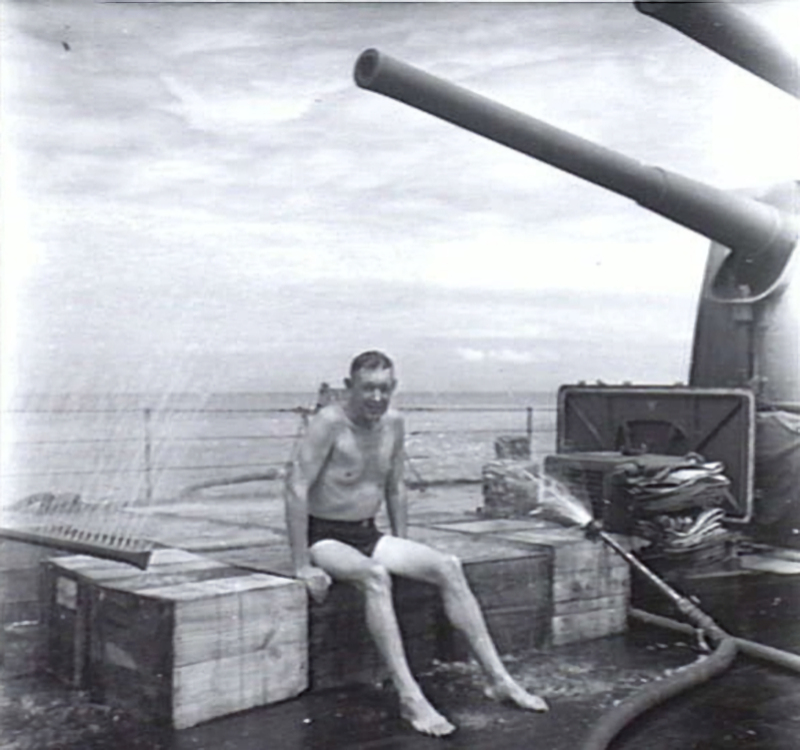
At sea 18 June 1945 -
Captain Dowling enjoying a cool shower during
the cooling of the ship's beer aboard the RAN cruiser HMAS
Hobart
In 1945 Dowling was awarded the Distinguished Service Order
for.....
.....outstanding skill and initiative whilst in command
of HMAS Hobart over a period of seven months in operations
in the Far East which covered the bombardments of Tarakan,
Wewak, Labuan and Balikpapan and the attacks on the Lingayen
Gulf, Aitape and Wewak.
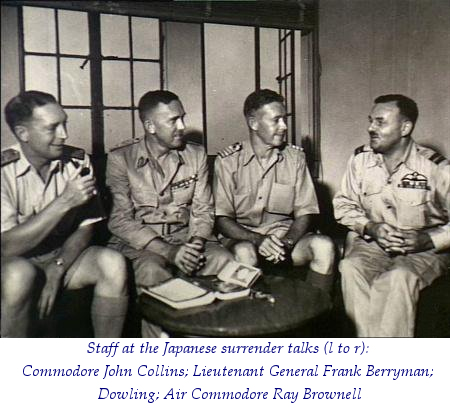 Present at the Japanese surrender in Tokyo Bay on 2
September 1945, Hobart became the flagship of the Australian
Squadron. Until February 1946 Dowling acted as flag captain
and chief of staff to Commodore (Vice Admiral Sir) John
Collins. Although ill as a result of wartime strain, Dowling
impressed Collins as a capable officer. A period of leave
restored Dowling's health and in May he was appointed
director of naval ordnance, torpedoes and mines at Navy
Office. While this post did not have the broad
responsibilities of DCNS, he had to plan for the
acquisition of modern weapons and the development of
manufacturing facilities to produce them in Australia. Present at the Japanese surrender in Tokyo Bay on 2
September 1945, Hobart became the flagship of the Australian
Squadron. Until February 1946 Dowling acted as flag captain
and chief of staff to Commodore (Vice Admiral Sir) John
Collins. Although ill as a result of wartime strain, Dowling
impressed Collins as a capable officer. A period of leave
restored Dowling's health and in May he was appointed
director of naval ordnance, torpedoes and mines at Navy
Office. While this post did not have the broad
responsibilities of DCNS, he had to plan for the
acquisition of modern weapons and the development of
manufacturing facilities to produce them in Australia.
Dowling was only tangentially involved in preparations for
the Fleet Air Arm, but the purchase of the first of the new
carriers offered him a great opportunity. Four RAN
captains senior to him had been killed in the war; of those
surviving, only J.M. Armstrong was in the running for
carrier command. When Armstrong became medically unfit for
sea service, Dowling went to England in his stead and in
December 1948 commissioned HMAS Sydney.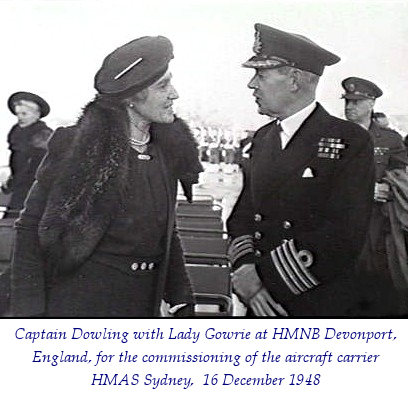 Provided he were
successful in the ship, he was certain to be selected for
flag rank. Sydney and her air group soon established a high
level of efficiency. Provided he were
successful in the ship, he was certain to be selected for
flag rank. Sydney and her air group soon established a high
level of efficiency.
In April 1950 Dowling left Sydney with great regret and in
need of rest. He was given leave before his appointment in
June as chief of naval personnel. Elevated at the same time
to Commodore, first class, he had much of the status of a
rear admiral. It is likely that Dowling would have later
received an exchange posting with the RN, had not Rear
Admiral H.B. Farncomb - who was in line to succeed Collins as
Chief of Naval Staff - been retired in 1951. Farncomb's
departure made Dowling the heir apparent.
Dowling's term in charge of personnel reinforced his
interest in sailors' welfare and pay. The demands of the
Korean War and the expansion of the RAN in a period of
low unemployment
 occasioned considerable manpower problems. Dowling did his best to make the navy an attractive career,
recruited former RN personnel and expanded the women's
service. occasioned considerable manpower problems. Dowling did his best to make the navy an attractive career,
recruited former RN personnel and expanded the women's
service.
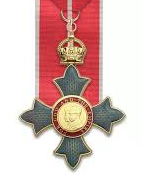
Appointed Commander of the Order of the British Empire (CBE) in 1953, he attended the Imperial
Defence College, London, that year. On 8 July he was
promoted Rear Admiral and in December assumed command of
HMA Fleet. The Federal government introduced economies
after hostilities ceased in Korea, and he was obliged to
oversee a reduction in operations. Conversely, he had the
pleasure of escorting the royal yacht, Gothic, during Queen
Elizabeth II's tour of Australia in 1954.
On 24 February 1955, Dowling succeeded Vice Admiral Sir John
Collins as First Naval Member, Australian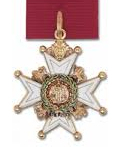 Commonwealth Naval Board, and Chief of Naval Staff (CNS).
He was promoted to Vice Admiral on 7 June, and appointed a
Companion of the Order of the Bath (CB) in the Queen's
Birthday Honours two days later.
Commonwealth Naval Board, and Chief of Naval Staff (CNS).
He was promoted to Vice Admiral on 7 June, and appointed a
Companion of the Order of the Bath (CB) in the Queen's
Birthday Honours two days later.
On 15 June, he joined fellow Chiefs of Staff Lieutenant
General Henry Wells and Air Marshal John McCauley, Prime
Minister Robert Menzies, and senior government members in
approving a draft directive for the role of the Far East
Strategic Reserve (FESR); this made Commonwealth forces
available for the fight against communist insurgents in
Malaya, as well as for the security of Malaya and Singapore
against external aggression. The Navy's contribution
to the FESR was to be at least two destroyers or frigates on
an ongoing basis, as well as a yearly visit by an aircraft
carrier. The destroyers HMAS Arunta and HMAS
Warramunga, already in the region on an exercise,
were immediately committed, and Dowling flew to Singapore to
personally announce the plan and the reasons for it to the
ships' crews.
His term of office was also marked by continuous
pressure on the RAN as the government curbed defence
spending and accorded the navy the lowest priority of the
three services. Collins had reluctantly decided to cancel
new construction. Dowling struggled to retain the Fleet Air
Arm and the aircraft carrier, Melbourne.
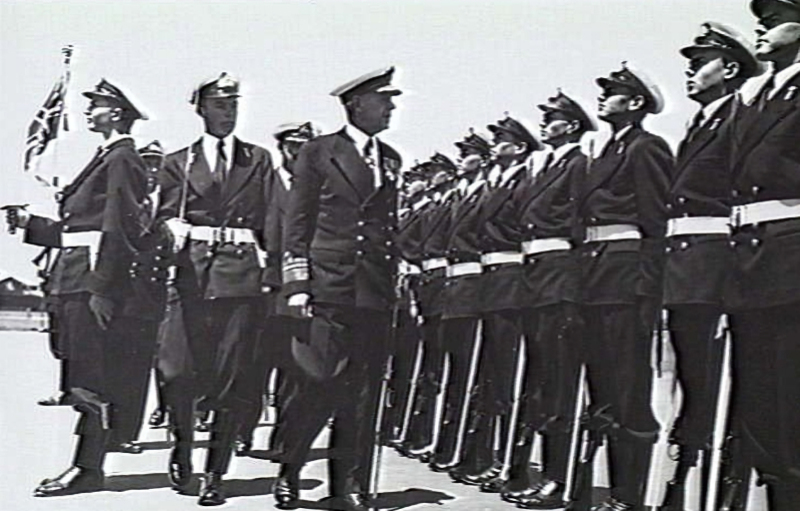
HMAS Cerberus, Flinders
Naval Depot, Vic. 07 December 1955.
Vice Admiral Sir Roy Dowling, First Naval Member and Chief
of Naval Staff,
inspects cadet Midshipmen from Jervis and Burnett years at
their passing out parade.
With a limited capacity in the Naval Staff for assessing
technological developments, Dowling came to rely on the
advice of the British first sea lord, Earl Mountbatten, whom
he admired and whose friendship he valued. The years 1955-59
marked the last flourish of the client relationship of the
RAN with the RN, even though Britain was no longer able
to help in maintaining those capabilities which Australians
thought essential in their service. Alarmed by the expansion
of the Soviet and Indonesian navies, Dowling canvassed the
purchase of tactical nuclear weapons to provide some means
of destroying large warships.
The need for an offensive capacity of this nature and for
protection against modern aircraft increasingly concerned
the Naval Staff. Much of the groundwork was laid in
Dowling's time for the later decision to buy American
guided-missile destroyers, though he held that the RAN's
primary contribution to the Western alliance should remain
in anti-submarine warfare. He was one of the first to
propose that the RAN be equipped with submarines and
believed that they would be essential if the Fleet Air Arm
could not be sustained. His long-held wish to return the
RANC from Flinders Naval Depot to Jervis Bay was
realised in 1958. He moved his office to Canberra in 1959.
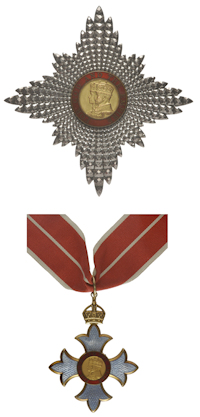 Elevated to
Knight Commander of the Order of the British Empire (KBE) in 1957, Sir Roy anticipated retirement
at the end of his term in 1959, but was unexpectedly offered
the Chairmanship of the Chiefs Of Staff Committee (COSC),
the forerunner of the role of Australia's Chief of Defence
Force (CDF). Despite
the position's lack of executive authority, Dowling accepted
with enthusiasm. He was relieved as CNS on 22 March and
took up the chairmanship next day. The office proved largely
frustrating for him. Advised by Mountbatten, who was then
Chief of the Defence Staff in Britain, he attempted to
achieve similar status and title, but the prospect of an
executive head did not appeal to the services, nor to the
Department of Defence, and Dowling's suggestion made little
progress. He also had to preside over the decision to
abandon the Fleet Air Arm - a move reversed after his
retirement - and other defence cuts. Elevated to
Knight Commander of the Order of the British Empire (KBE) in 1957, Sir Roy anticipated retirement
at the end of his term in 1959, but was unexpectedly offered
the Chairmanship of the Chiefs Of Staff Committee (COSC),
the forerunner of the role of Australia's Chief of Defence
Force (CDF). Despite
the position's lack of executive authority, Dowling accepted
with enthusiasm. He was relieved as CNS on 22 March and
took up the chairmanship next day. The office proved largely
frustrating for him. Advised by Mountbatten, who was then
Chief of the Defence Staff in Britain, he attempted to
achieve similar status and title, but the prospect of an
executive head did not appeal to the services, nor to the
Department of Defence, and Dowling's suggestion made little
progress. He also had to preside over the decision to
abandon the Fleet Air Arm - a move reversed after his
retirement - and other defence cuts.
Convinced that Australia should be prominently involved in
the South-East Asia Treaty Organization, in March 1961
Dowling addressed a press conference in Bangkok and affirmed
his country's readiness to send troops to Laos in an
emergency. Under Opposition pressure, the Federal government
declined to endorse his remarks.
Dowling retired on 28 May 1961, but wanted other employment. Eschewing commerce, he had hoped that Prime Minister (Sir)
Robert Menzies would find him a diplomatic posting and was
disappointed that nothing eventuated. He remained in
Canberra where he pursued an active role in the Anglican
Church, of which he was a devout member, and served as
chairman (1962-67) of the local division of the Australian
Red Cross Society.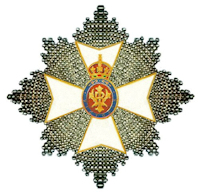
In July 1962 Dowling was chosen to plan the forthcoming
royal tour of Australia. He threw himself into the work and
in March 1963 Queen Elizabeth II invested him as Knight
Commander of the Royal Victorian Order (KCVO). In
November he was appointed permanent Australian secretary to
the Queen.
Survived by his wife, two sons and three
daughters, he died of a heart attack on 15 April 1969
in Canberra Hospital. He was given a naval funeral at
St John's Church, and cremated.
A physically robust man who considered himself primarily a
sea-going officer, Dowling possessed fine powers of
leadership and a sound rather than penetrating intellect. He
was thrust into the highest positions of the RAN largely
as a result of the heavy casualties of World War II. That
his terms as CNS and COSC were marked by few innovations was as much due to
the limited priority given to defence as to any lack of
effort on his part. His task had been to hold the line.
Sources:
Australian Dictionary of Biography by
J.V.P. Goldrick
National Portrait Gallery UK
Australian War Memorial
Wikipedia
Compiled by Laurie Pegler |
